TL;DR — Quick summary
Postpartum acupuncture may complement your wider recovery plan, but it does not replace OB, midwife, pelvic-health, lactation or mental-health care. Timing depends on your birth and medical needs. Seek urgent care for warning signs, and coordinate treatment around incision healing, feeding and your clinician’s instructions.
Table of contents
Postpartum acupuncture may be one supportive part of care during weeks that can include joy, exhaustion, pain, feeding questions, emotional changes, and a body that is still healing. Postpartum acupuncture may be used as one part of a broader support plan, but it should sit alongside—not in place of—care from your OB-GYN, midwife, primary-care clinician, pelvic-health therapist, mental-health professional, or lactation specialist.
The American College of Obstetricians and Gynecologists describes postpartum care as an ongoing process rather than a single visit. ACOG recommends contact with a maternal-care provider within the first three weeks after birth, followed by continuing care and a comprehensive visit no later than 12 weeks, with timing individualized to the patient. Read ACOG’s postpartum-care guidance.

Where postpartum acupuncture may fit
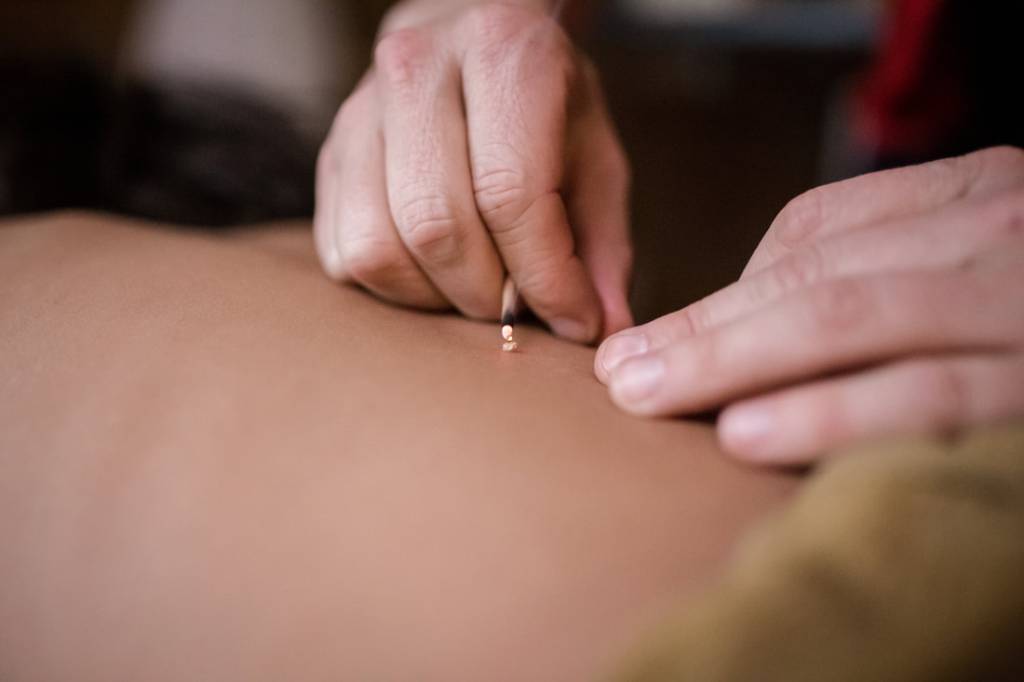
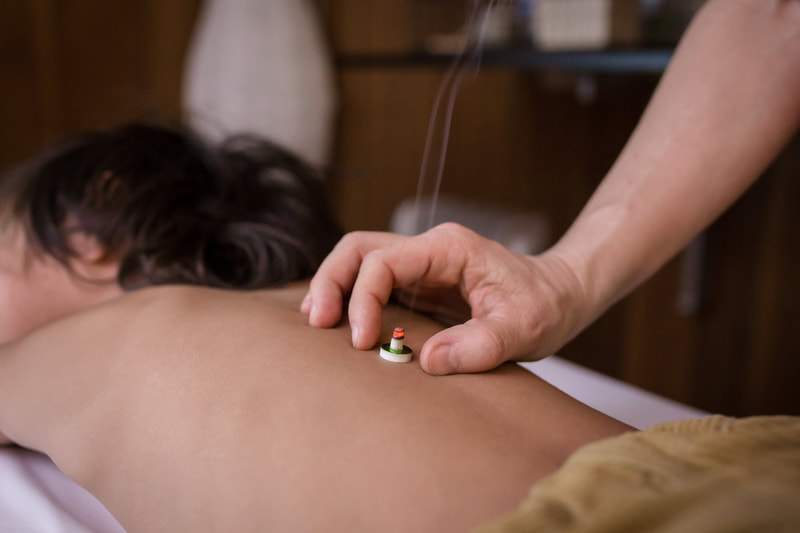
At Bumblebee AcuTherapy, a postpartum visit begins with listening: how the birth went, how you are healing, what your medical team is monitoring, how feeding is going, and what feels most difficult right now. Treatment may be adapted for tenderness, fatigue, positioning needs, a recent cesarean incision, or the practical reality that you may arrive with your baby.
People commonly ask about support for tension, musculoskeletal discomfort, rest, stress, or general recovery. We avoid promising that acupuncture will treat postpartum hemorrhage, infection, depression, low milk supply, organ prolapse, or surgical complications. Those concerns need evaluation by the appropriate medical professional; complementary care may be considered only after urgent needs are addressed and your care team agrees it is appropriate.

Acupuncture after a C-section
After a cesarean birth, tell your acupuncturist how many days or weeks postpartum you are, whether the incision has been checked, and whether there is redness, drainage, worsening pain, fever, or another concern. Treatment does not need to involve the incision. Positioning and technique can be changed to protect healing tissue, and direct work near a scar should wait until medically appropriate.
Acupuncture is not a treatment for an infected or opening incision, severe abdominal pain, or a suspected blood clot. Follow your discharge instructions and contact your maternal-care provider when recovery is not progressing as expected. ACOG advises postpartum assessment of cesarean-incision pain and guidance about normal versus prolonged recovery.

Acupuncture while breastfeeding
Acupuncture sessions can usually be planned around feeding or pumping, with positioning adjusted for comfort. Acupuncture should not be presented as a guaranteed way to increase milk supply. The CDC recommends getting prompt help from a healthcare or lactation-support professional when you are worried about supply, latch, cracked or bleeding nipples, persistent pain, or possible mastitis. See the CDC’s newborn breastfeeding guidance.
If herbs or supplements are being considered, discuss them with your prescribing clinician, pediatrician, or pharmacist. Substances taken by a breastfeeding parent can affect the parent or infant, and individualized medical advice matters. Bring an updated medication and supplement list to your visit.

Know the urgent postpartum warning signs
Supportive care must never delay emergency evaluation. The CDC advises seeking immediate medical care for urgent warning signs during pregnancy and for up to a year after delivery. These include a severe or worsening headache, fainting, vision changes, fever of 100.4°F or higher, trouble breathing, chest pain, heavy bleeding, severe belly pain, major swelling of the face or hands, or thoughts of harming yourself or your baby. Review the CDC’s urgent maternal warning signs.
Call 911 for an emergency. For non-emergency concerns, contact your OB-GYN, midwife, or primary-care clinician. If breastfeeding is painful or you are worried that your baby is not getting enough milk, contact a lactation professional or your baby’s clinician. Acupuncture can wait until you and your medical team know it is appropriate.
Frequently asked questions
How soon after birth can I schedule acupuncture?
There is no single timeline for everyone. It depends on the birth, complications, symptoms, mobility, and your medical team’s advice. Contact your maternal-care provider first if anything feels concerning.
Can I bring my baby?
Ask when booking so the clinic can explain its current policy and plan a comfortable visit.

Can postpartum acupuncture replace pelvic-floor therapy or mental-health care?
No. It may be considered supportive care, but it does not replace diagnosis or treatment from a pelvic-health therapist, physician, or licensed mental-health professional.
Postpartum acupuncture in Lakewood, Colorado
For gentle support during the fourth trimester, explore our postnatal acupuncture service or book an appointment. We serve families in Lakewood, Wheat Ridge, Edgewater, west Denver, Golden, and surrounding communities.
This article is educational and is not medical advice. Seek urgent medical care for warning signs or rapidly worsening symptoms.
Discuss postpartum acupuncture in Lakewood
Bumblebee AcuTherapy welcomes patients at 2201 Kipling Street, Suite 205, Lakewood, CO 80215. Learn about the postpartum care guide and use our visit guide to plan your journey from Lakewood or nearby Wheat Ridge, Edgewater, Golden and west Denver.
For appointment questions, call Maya at 720-893-0385 or Dierdre at 720-727-7490. You can also check online appointment availability. We have one Lakewood office; references to nearby communities describe our service area, not additional locations.