
TL;DR — Quick summary
Is pediatric acupuncture safe? What research shows, how Shonishin differs from needles, and questions to ask before your child’s first visit in Lakewood, CO.
Table of contents
Pediatric acupuncture safety depends on practitioner training, hygiene, the technique being used and the child’s individual health needs. Parents deserve a clear explanation of possible reactions, alternatives and the limits of the research before agreeing to treatment.
Pediatric AcuTherapy does not always involve inserted needles. Bumblebee also uses Shonishin, a Japanese pediatric approach that can include gentle stroking, tapping or pressing tools on the skin. The visit should be adapted to the child’s age, comfort and sensory preferences, not treated as a scaled-down adult session.

What does research say about pediatric acupuncture safety?
A systematic review in Pediatrics found that many reported adverse events from pediatric needle acupuncture were mild, including pain, bruising and minor bleeding. Serious events were also reported, some associated with substandard practice. These findings are not a reason to describe acupuncture as risk-free.
Research on inserted needles cannot automatically establish the safety or effectiveness of every non-insertive technique. Parents should ask which approach is planned and what evidence relates to their child’s specific concern. Incomplete safety reporting means that absence of a reported complication does not prove it cannot occur.
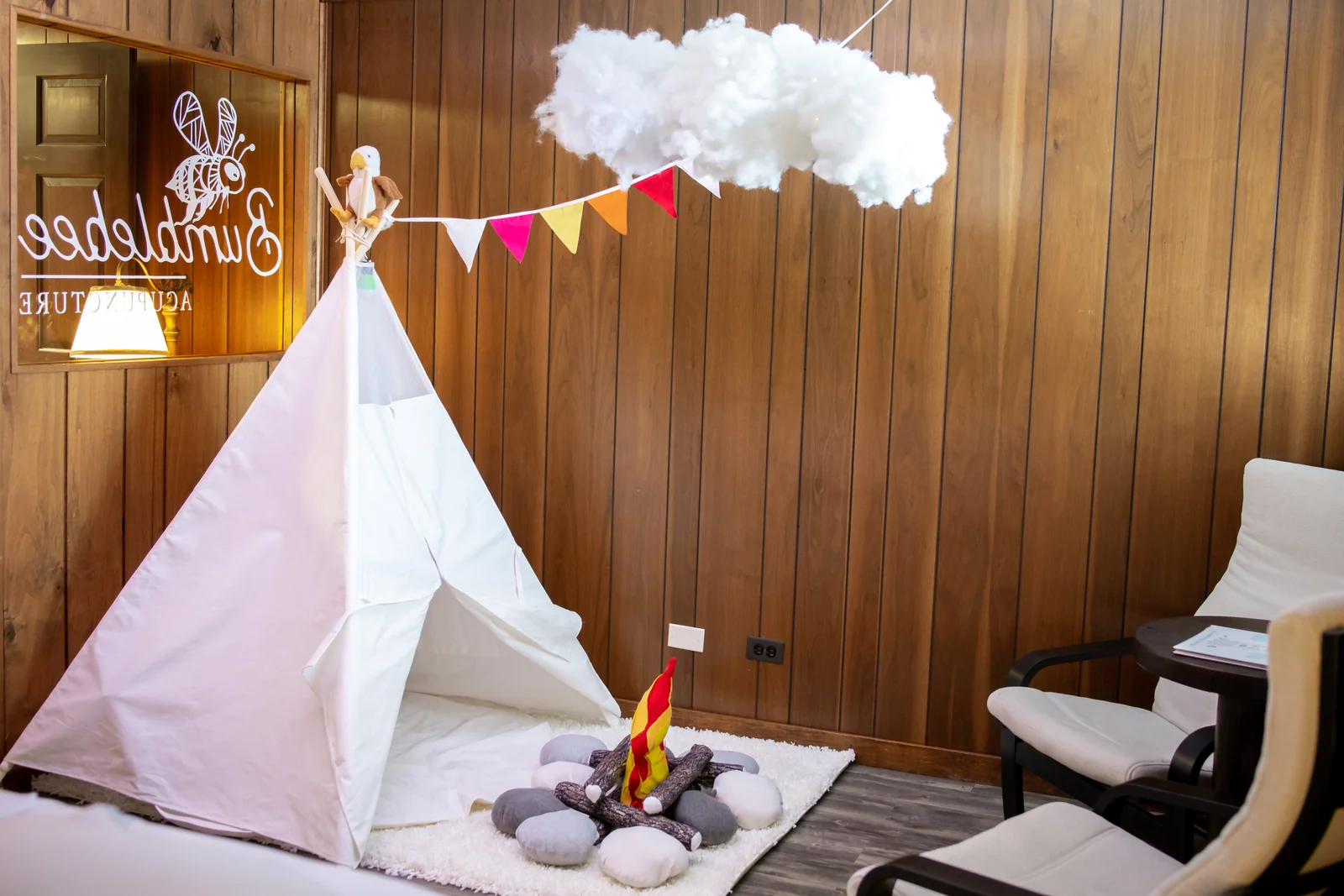
How is Shonishin different from needle acupuncture?
Shonishin commonly uses tools to stroke, tap or press the skin without puncturing it. This may be more acceptable to children who dislike needles or find it difficult to remain still. Pressure, duration and the choice of tool should be adjusted to the individual child.
Needle acupuncture may be considered for some children, but parents should receive a plain-language explanation before consent. Ask whether a needle will be inserted, how long it may remain, what sensations are expected and what alternatives are available if the child does not want that technique.

How should a child’s comfort be protected?
A child should not be forced through treatment. Tools can be introduced in age-appropriate language, and a parent or caregiver can help explain the child’s preferences. The practitioner should pause or stop if the child is distressed. Ask about the clinic’s caregiver policy when arranging the appointment.
Tell the practitioner about medications, allergies, bleeding disorders, immune conditions, recent surgery, skin infections and ongoing medical evaluations. Ask how tools are cleaned and how sterile, single-use needles are handled if needles are part of the plan. Mention past fainting or strong reactions to procedures.
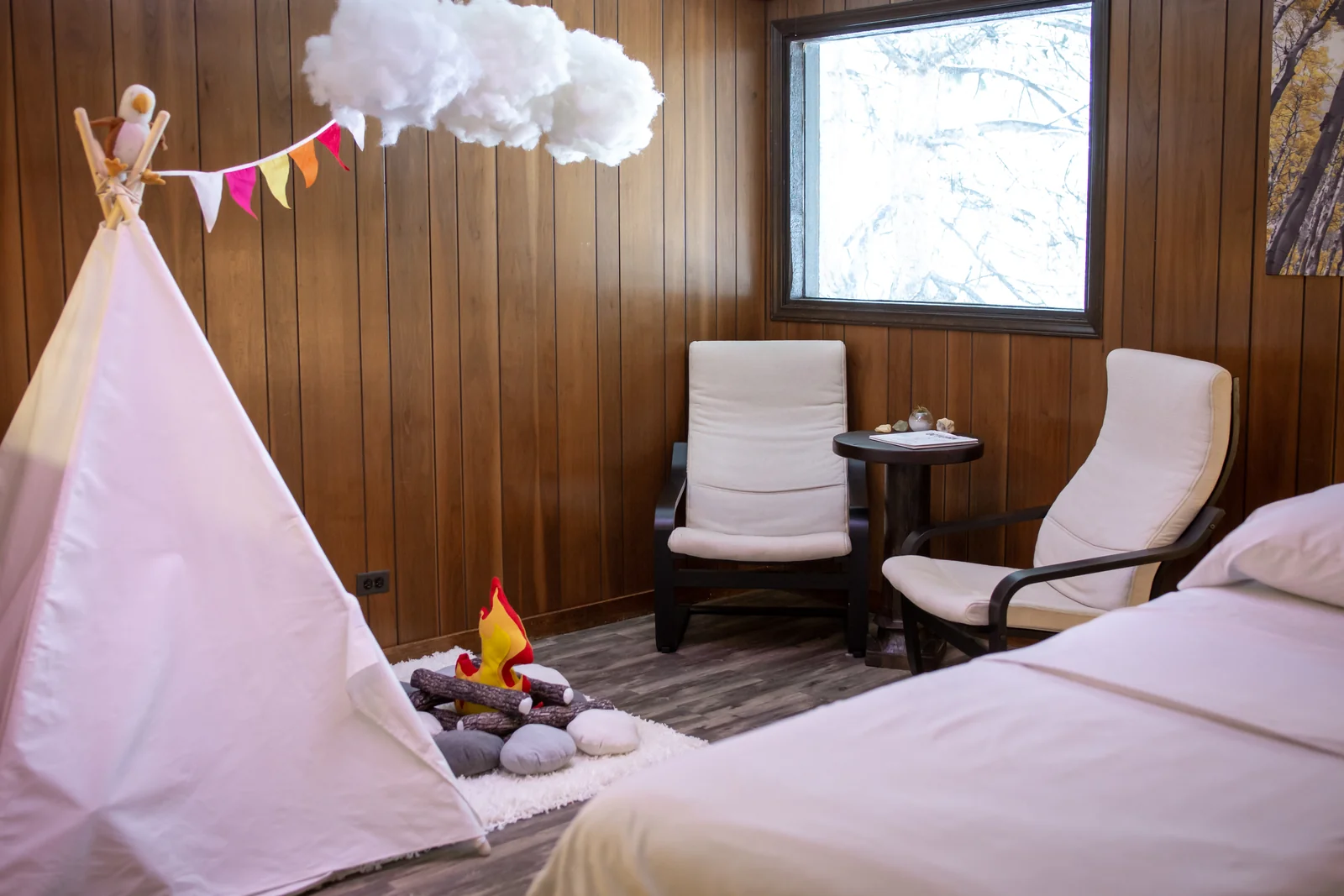
What happens during a pediatric AcuTherapy visit?
The first visit begins with the parent’s description of the concern and the child’s relevant medical history. A practitioner may observe movement and behavior and explain any touch-based assessment before proceeding. Hands-on treatment may be brief; the child should not be expected to tolerate a long adult-style appointment.
Afterward, ask what was done, what short-term reactions might occur and whom to contact if there is a concern. Obtain a clear reassessment plan. If symptoms worsen or there is no meaningful progress, medical evaluation may be needed rather than simply adding visits. Confirm the appointment length directly with the clinic.
When should medical care come first?
Seek emergency help for severe breathing difficulty, a seizure, loss of consciousness, a severe allergic reaction or a rapidly deteriorating child. Contact the child’s clinician promptly for dehydration, significant fever, unusual sleepiness, worsening symptoms or concerns in a young infant. Do not wait for an acupuncture appointment to address urgent symptoms.
Pediatric acupuncture safety includes recognizing the limits of complementary care. Acupuncture should not be presented as a cure for autism, ADHD, epilepsy or another diagnosed condition, and it must not replace vaccinations, prescribed treatment or appropriate developmental and medical evaluation.
What are reasonable treatment goals?
Choose goals that are specific and observable, such as a symptom’s frequency or the child’s comfort during an appointment. Discuss how long to monitor a goal and when to reassess. Changes reported by parents should be considered alongside the child’s medical care, not treated as proof that acupuncture caused improvement.
Evidence for effectiveness varies by condition. A 2015 overview of pediatric acupuncture reviews found mixed findings and substantial quality limitations. A responsible practitioner explains uncertainty and does not guarantee a result or recommend an open-ended series without reassessment.
A pediatric acupuncture safety checklist for parents
- Ask about pediatric-specific training and experience.
- Confirm whether the appointment uses Shonishin, inserted needles, heat or another technique.
- Discuss hygiene, expected sensations and possible reactions.
- Explain your child’s sensory needs and how to signal a pause.
- Agree on a practical treatment goal and reassessment point.
- Keep your pediatrician informed and follow medical instructions.
Frequently asked questions
Does pediatric acupuncture always use needles?
No. Some approaches use contact tools on the skin. Ask what is planned for your child rather than assuming that the term “acupuncture” describes one fixed technique.
What reactions should parents watch for?
Depending on the technique, temporary tenderness, a small bruise or minor bleeding may occur. Report unexpected or persistent symptoms. Serious symptoms warrant medical attention, not just a message to the acupuncturist.
Is needle-free treatment automatically safe for every child?
No. Skin conditions, illness, pressure, heat and the child’s tolerance still matter. A non-insertive technique avoids puncture-related risks but does not remove the need for screening, consent and careful practice.
How many visits will my child need?
There is no universal answer. Ask what benefit is being monitored and when the plan will be reviewed. Cost, travel, school and family routines should also be part of the decision.
Explore our AcuTherapy for children, meet the Bumblebee team, or contact the Lakewood clinic. This information is educational and does not replace individualized advice from your child’s medical team.
Pediatric AcuTherapy questions for our Lakewood clinic
Bumblebee AcuTherapy welcomes patients at 2201 Kipling Street, Suite 205, Lakewood, CO 80215. Learn about pediatric AcuTherapy and Shonishin appointments and use our visit guide to plan your journey from Lakewood or nearby Wheat Ridge, Edgewater, Golden and west Denver.
For appointment questions, call Maya at 720-893-0385 or Dierdre at 720-727-7490. You can also check online appointment availability. We have one Lakewood office; references to nearby communities describe our service area, not additional locations.